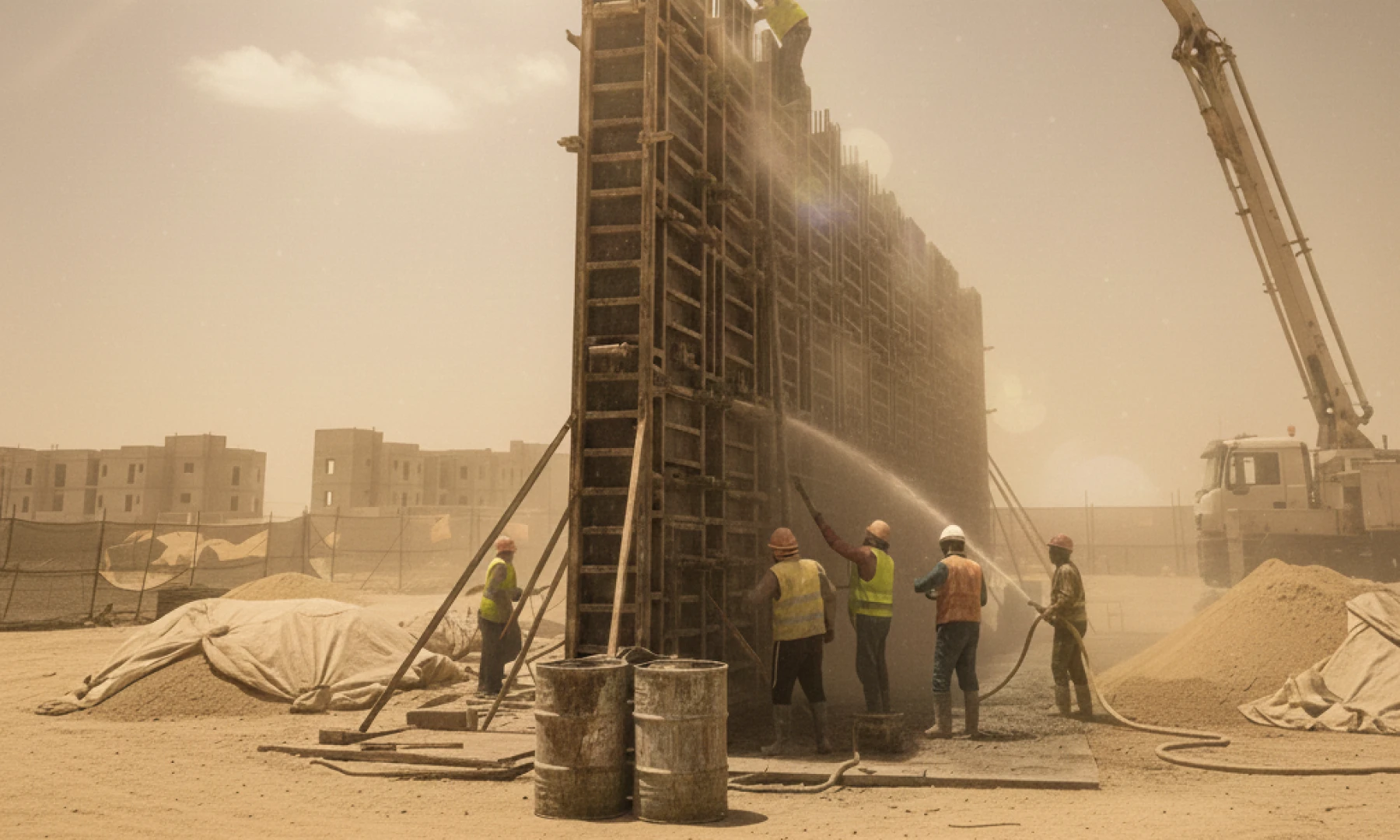
Short answer: Temperature and humidity are conditions to record when applying release agent, but there is no universal interval between spraying and casting. Consider the product, form-surface temperature, site environment, and manufacturer instructions together.
When application behavior changes between days or seasons, record the conditions before changing the procedure. Also see Release Agent Application: Spraying, Coverage, and Quality Control and Can Too Much Release Agent Cause Staining on Concrete?.
What to Record on Site
To compare applications, record:
- product, batch, and application method
- form material and condition
- air temperature and, when available, form-surface temperature
- humidity, direct sun, wind, and shade
- application time and interval before casting
- the film’s appearance before placement and the surface condition after stripping
These records do not identify the cause of a defect by themselves, but they help compare pours and identify which conditions changed.
On Hot Days
Do not use the weather forecast alone to estimate the form’s condition. Surface temperature can differ from air temperature, especially when a panel is in direct sun. Follow the product’s storage and application limits, and check the film on a representative area before changing the interval or coverage.
In Humid or Cold Conditions
Record the actual form and site conditions, then assess the film according to the manufacturer’s instructions. Relative humidity alone does not determine whether the product is ready for concrete. Avoid compensating for a different drying response by applying more product or changing the method without a controlled trial.
How to Validate a Change
- Keep the product, equipment, and initial method the same.
- Select a representative area or panel and record the conditions.
- Change only one controllable factor, as allowed by the product data and approved procedure.
- Compare application, stripping, and finish against the project criteria.
- Record the result before adopting the change on other pours.
If performance still varies, broaden the review to form condition, coverage, concrete, and the placement sequence. For the wider finish context, read Fair-Faced Concrete Finish: 3 Factors for Better Quality.